


Pricing & Availability
- MSRP: $375
- Discontinued
Tags
Reviews & News
- SOS, April 1994 review
- Mojo Pie rvw (bad!), Apr ‘05
- Scott Dorsey’s low-end mod
- Scott Dorsey MK-219 mod
- Tape Op Review (issue #56)
- Tape Op Review (issue #24)
MK-219 Documentation

 Oktava MK-219
Cardioid Condenser Microphone
The MK-219 is a popular large-diaphragm condenser, designed and produced in JSC Oktava’s factory in Tula, Russia. Since its release (in the West) in 1994, it has had a reputation of offering a great value for the price, which at the time was over $500. These mics regularly sell on Ebay for $80-$100 today.
Sound on Sound, April 1994
Rumour has it that the large diaphragm capsule used is based on an old Neumann design and, having done direct comparisons with my Microtech UM70 (a rather more elegant ex-Eastern bloc mic also purporting to use a Neumann capsule design), I can say that the two mics sounded so similar that in a blind test with vocals, I couldn’t tell one from the other.
Magnetic reed switching is provided for both the 10dB pad and high-pass filter switches built into the mic.
The MK-219’s large-diaphragm capsule can also be found in the MK-319; both are single-sided condenser capsules.
The MK-219 capsule assembly includes a “resonator disk” that extends the high frequency of the capsule (+4dB @ 10Hz). Some modders claim this resonator reduces impulse response accuracy and smoothness.
Scott Dorsey’s June, 2005 article on MK-219 mods from Recording Magazine has recently been published online; see the link in the sidebar. In it, Dorsey presents the following modifications:
- Mechanical mods
- Cut away the metal grille supports
- Caulk the inside of the body with silicone RTV to damp body resonance
- Electronic mods
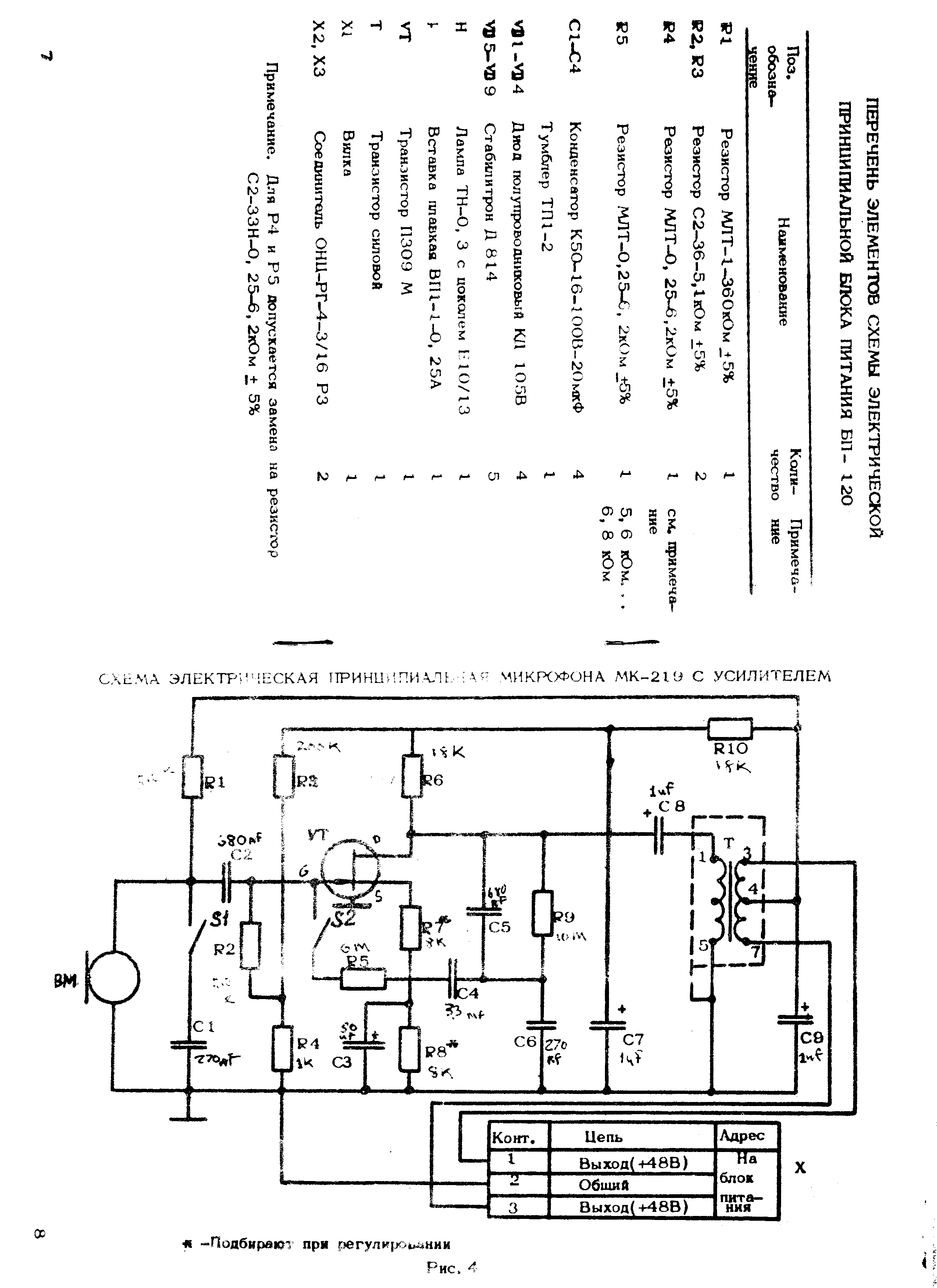
- Replace the FET with a Toshiba 2SK170BL
- Upgrade and install various resistors as specified in the article
- Replace electrolytic capacitors with tantalum types
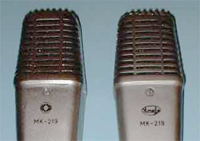 The mic dates to 1989, and possibly earlier, although it was not exported until the early to mid 1990s. See photos and details of early MK-219s, circa 1989.
Matched stereo pairs are available.
(Black MK-219 photo credit: George White)
As of August, 2013, the MK-219 has been discontinued. Some inventory remains at distributors, but the microphone will no longer be produced, according to Oktava.
The Oktava MK-219 is also known as: MK219, 219.
The mic was released in 1986.
Specifications
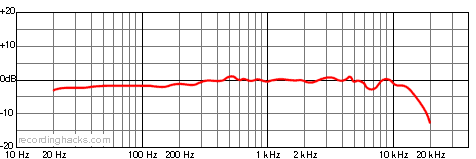
| Frequency Response - CardioidClick Graph to Compare! |
|---|
 |
| Pickup Patterns | Pads & Filters |
|---|---|
|
Cardioid
(40 - 18,000 Hz) |
|
| Capsule Dimensions | Impedance | SPL/Noise |
|---|---|---|
| Diaphragm diameter: 28mm Capsule diameter: 34.5mm |
200 Ohms (Low) | Max SPL: 122 dB |
| Weight | Length | Max Diameter | Interface(s) |
|---|---|---|---|
| 340g (11.99oz) | 202mm (7.95'') | 48mm (1.89'') |
|
| Power Specifications |
|---|
|
Did we get anything wrong on this page? Please let us know!